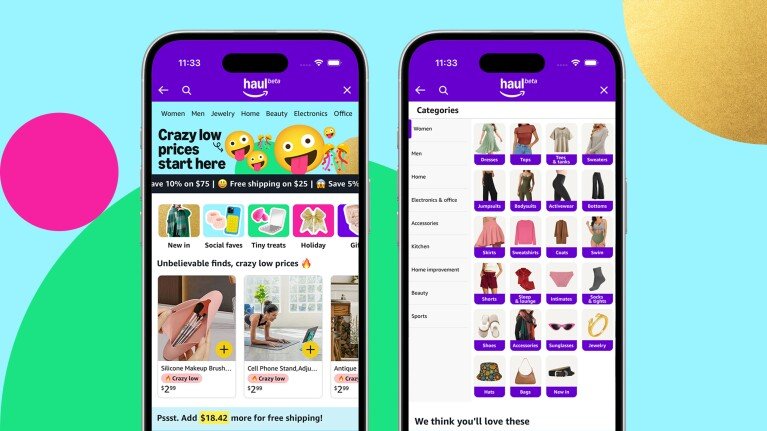
Amazon has recently launched its own version of discounted, low-cost storefronts similar to those of Temu and Shein. The Amazon Haul store is currently only accessible through the mobile app or mobile web browser, offering a range of mass-produced, discounted items, many of which are shipped from China. This marks a shift from Amazon’s usual reputation for speedy delivery times, as these overseas goods naturally take longer to arrive.
Amazon Haul Features
The layout of the Amazon Haul landing page resembles that of Shein and Temu, with items displayed in grids rather than Amazon’s traditional list format. Shipping times and star ratings are not immediately visible, requiring users to click on individual items for more details. Some products are highlighted with rocket ship or fire emojis to indicate fast-selling or low-priced items, appealing to bargain hunters.
Product Range and Customer Feedback
Amazon Haul offers a variety of products, including clothing, accessories, and household items at discounted prices. While Amazon continues to prioritize fast, free delivery for Prime members, the introduction of Amazon Haul caters to customers seeking ultra-low-priced items, even if they require longer shipping times. Despite concerns over the environmental impact of fast fashion and overseas shipping, low-cost retailers like Temu and Shein remain popular among Gen Z consumers.
Consumer Trust and Business Model
One potential advantage for Amazon over its competitors is the existing trust consumers have in the platform. Amazon claims to screen sellers beforehand and offers free returns within 15 days for items over $3, providing reassurance to shoppers. However, as Amazon collaborates with China-based sellers for mass-produced goods, it faces similar challenges in maintaining consumer trust while offering competitive pricing.
The launch of Amazon Haul comes amidst discussions around potential import tariffs on Chinese goods, highlighting the evolving landscape of e-commerce and international trade policies. While the future implications of such policies remain uncertain, the popularity of Chinese e-commerce shipments has drawn attention from both political parties, signaling a need for regulatory action to address concerns around duty-free exemptions and trade practices.