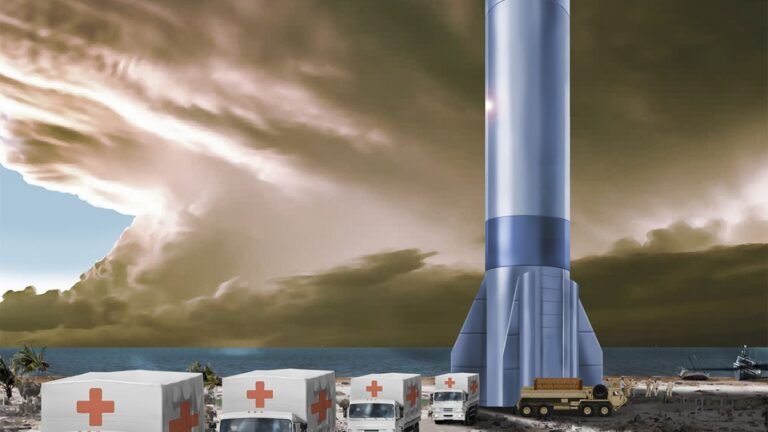
Blue Origin and Anduril have secured new contracts with the U.S. Air Force to delve into how their technology, including rockets, could be utilized to transport military cargo globally. The contracts, part of the Air Force’s Rocket Cargo program, may be small in size – with Blue Origin’s at $1.37 million and Anduril’s at $1 million – but they represent significant steps in transforming how the Pentagon moves cargo. These study contracts also indicate which players may later compete for larger funding opportunities.
Exploring New Frontiers
Anduril’s contract, in particular, hints at the defense startup’s venture into a new business domain. The awards are part of the U.S. Air Force Research Laboratory’s Rocket Experimentation for Global Agile Logistics (REGAL) program, an arm of the larger Rocket Cargo initiative focused on “delivery as a service” through orbital transport. The program aims to validate commercial, reusable rockets, reentry systems, and cargo transport systems to enable rapid deliveries to remote locations in less than an hour.
Breakthrough Innovations
Blue Origin’s contract involves analyzing how its technology can support “point-to-point material transportation,” with a focus on its operations in Merritt Island, Florida. Meanwhile, Anduril’s design study contract, awarded under REGAL, centers on developing a reentry container capable of carrying significant payloads from Earth and back. The proposal emphasizes the need for a thermal protection system and integration with various government-defined payloads.
Future Implications
The possibilities are vast – from the potential for large loads riding commercial heavy rockets and returning to Earth in capsules for quick offload to even point-to-point human transportation. With other players like Rocket Lab also in the mix, the future of rocket cargo services appears promising. The transformation of cargo transport from orbit to Earth is on the horizon, driven by innovation and strategic partnerships.