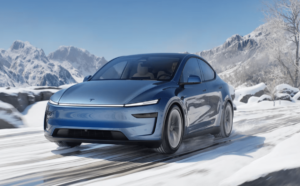
The all-electric 2025 Lucid Air Pure is a luxurious yet affordable option in Lucid’s Air lineup. The car offers a high-end driving experience with its sleek design and advanced technology features.
Nuts and bolts
Featuring an estimated 420 miles of range and a single rear-mounted motor with 430 horsepower, the Lucid Air Pure competes with the Tesla Model S. The car supports fast charging, adding 200 miles of range in just 15 minutes at various charging stations. With an impressive drag coefficient of 0.197, the Air Pure is as aerodynamic as it looks.
Expansive and tech-focused
The interior of the Lucid Air Pure offers a sensory experience with its spacious design and high-quality materials. The car features a 34-inch curved glass cockpit with three control zones for easy access to essential functions and entertainment options. The Pilot Panel, located above the center console, allows for climate control, parking assistance, and driver settings. Additionally, the car offers optional upgrades for massaging and ventilated seats for added luxury.
Overall, the Lucid Air Pure blends luxury with advanced technology to provide a comfortable and enjoyable driving experience. With ongoing tech improvements, this electric vehicle offers good value for its price tag of $69,900.
The backseat of the Lucid Air Pure offers 39 inches of headroom and 37.6 inches of legroom, providing ample space for passengers to be comfortable. Backseat riders have their own touchscreen for controlling seat heating, air temperature, and sunshade. The trunk provides 22.1 cubic feet of storage, while the frunk offers 10 cubic feet, making it suitable for Costco runs.
The Lucid Assistant, powered by SoundHound AI, falls short in comparison to other voice assistants. While it can handle specific car-related commands, music requests were limited and sometimes inaccurate. Despite the Dolby Atmos sound system’s excellent quality, connectivity to music streaming services like Spotify was inconsistent.
The native GPS navigation system in the Lucid Air Pure may not always accurately account for traffic, with ETA differentials reaching up to 20 minutes. The Lucid app functions well for basic tasks such as opening the trunk and unlocking the car, but it lacks the advanced features of Tesla’s app.
In terms of handling, the Lucid Air Pure delivers a grippy feel thanks to its low stance, while acceleration from 0 to 60 mph takes 4.5 seconds. The car offers three drive modes – Smooth, Swift, and Sprint – catering to different driving preferences. Regenerative braking settings can also be adjusted for added control.
Equipped with 24 sensors, including cameras, infrared, ultrasonic, and radar technology, the Lucid Air Pure features DreamDrive Premium ADAS. Additional upgrades to DreamDrive Pro for $2,500 expand sensor capabilities to 32, including lidar and enhanced camera functionality, along with highway-assist features like lane centering and adaptive cruise control.
The benefit in purchasing the Pro ADAS feature and its accompanying hardware lies in the promise of future capabilities. Lucid’s DreamDrive still has room for improvement, but buying the Pro ADAS ensures you have the necessary hardware for potential automated driving updates via over-the-air updates.
Visual aids like the 3D surround-view monitoring, front and rearview visuals, and blind-spot detection were found to be helpful, albeit slightly overwhelming in tight spaces or lane changes.
The Highway Assist feature proved most useful, especially in stop-and-go traffic on California highways. This feature essentially steers for you within the same lane, maintaining a pre-set speed and follow distance. Lane-change assist on the highway can be initiated by long-pressing the turn signal.
Deactivating Highway Assist was a smooth process by simply pressing the brake pedal, without any jerky or clunky transitions experienced in older software versions.
Lucid vehicles equipped with the standard DreamDrive or Pro offer drowsy and distracted driver warnings, albeit with varying effectiveness. The Air Pure feature monitors the driver through an infrared sensor near the steering column, detecting the driver’s face orientation but not specifically monitoring their eyes for privacy reasons.
Testing the car’s highway-assist mode involved deliberate risky behaviors like closing eyes for 30 seconds or pretending to fall asleep, resulting in the car issuing alerts for unsafe driving after a delay.
The Auto Park feature scans for nearby parking spots, with mixed success in detecting available spaces. While parallel parking proved challenging, the car successfully backed into parking spaces. Auto Unpark feature struggled with checking surroundings before maneuvering.
Overall, the Lucid showed great potential, with room for improvement through continuous tech iterations and enhancements over the years.