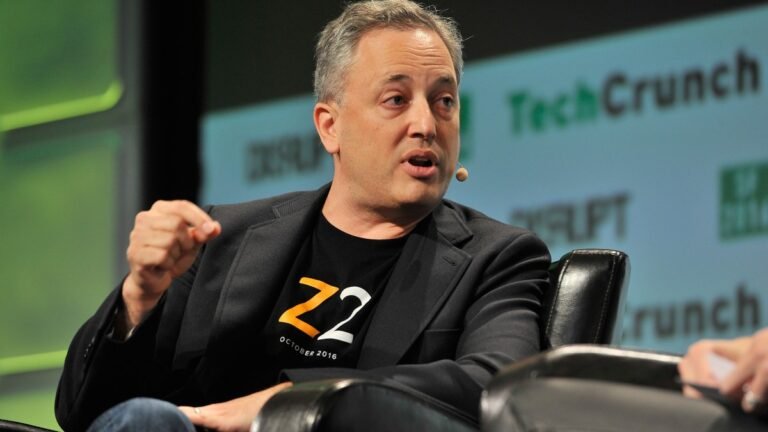
President-elect Donald Trump has surrounded himself with Silicon Valley entrepreneurs — including Elon Musk, Marc Andreessen, and David Sacks — who are now advising him on technology and other issues. When it comes to AI, this crew of technologists is fairly aligned on the need for rapid development and adoption of AI throughout the U.S. However, there’s one AI safety issue this group brings up quite a bit: the threat of AI “censorship” from Big Tech. Trump’s Silicon Valley advisers could make the responses of AI chatbots a new battleground for conservatives to fight their ongoing culture war with tech companies.
AI censorship is a term used to describe how tech companies put their thumb on the scale with their AI chatbots’ answers in order to conform to certain politics, or push their own. Others might call it content moderation, which often refers to the same thing but has a very different connotation. Much like social media and search algorithms, getting AI answers right for live news events and controversial subjects is a constantly moving target.
“This is my belief, and what I’ve been trying to tell people in Washington, which is if you thought social media censorship was bad, [AI] has the potential to be a thousand times worse,” said a16z co-founder Marc Andreessen in a recent interview with Joe Rogan. “If you wanted to create the ultimate dystopian world, you’d have a world where everything is controlled by an AI that’s been programmed to lie,” said Andreessen in another recent interview with Bari Weiss. Andreessen also disclosed to Weiss that he has spent roughly half his time with Trump’s team since the election happened, offering advice on technology and business.
“The most cited case of AI censorship was when Google Gemini’s AI image generator generated multiracial images for queries such as “U.S. founding fathers” and “German soldiers in WWII,” which were obviously inaccurate.
Some tech companies have been influencing specific results through their AI systems. For example, ChatGPT avoids answering questions about certain names, and Google and Microsoft’s chatbots refused to disclose the winner of the 2020 U.S. election. During the 2024 election, most AI systems remained silent on election results, except for Perplexity and Grok.
While these companies claim to act in the best interest of their users, some argue that biases and preferences still influence the AI. The incident involving Gemini led Google to disable its ability to generate images of people. Venture capitalists like Andreessen and Sacks believe that tech companies are not addressing biases and are instead making them more subtle.
Elon Musk, a vocal critic of “woke AI chatbots,” has launched xAI to compete with systems like ChatGPT. Musk’s efforts have not only raised significant funding but also led to legal action against competitors like OpenAI. His influence has even prompted investigations by government officials, showing a pushback against AI censorship.