Update 10 a.m. PT: Trump’s AI Action Plan was unveiled after this article published. Read TechCrunch’s coverage on the fully released plan here.
U.S. President Donald Trump is expected to unveil his long-awaited AI Action Plan at a Washington, D.C. event Wednesday hosted by Silicon Valley insiders — his first major address concerning artificial intelligence since he took office for the second time in January.
The AI Action Plan should provide a roadmap of the Trump administration’s strategies, priorities, and concerns around AI — likely a technology that will come to define the 47th president’s term.
The plan is effectively a replacement for the Biden AI executive order, the previous administration’s AI strategy which placed a large focus on mandating AI companies to submit safety and security reports, and trying to limit racial or otherwise discriminatory bias in frontier AI models. Trump repealed Biden’s order within days of his inauguration, arguing that its requirements could be onerous for AI companies, and may hinder American innovation.
In its first six months, the Trump administration has broadly encouraged efforts to accelerate the development and distribution of American AI technology. Trump helped OpenAI, Oracle, and SoftBank announce their multibillion-dollar Stargate data center project, and the president peeled back restrictions on Nvidia selling its AI chips around the globe.
At the same time, Trump’s AI czar David Sacks has picked a fight with technology companies over “woke” AI, claiming that OpenAI, Anthropic, and Google are supposedly instilling left-leaning values into their AI chatbots and censoring conservative viewpoints.
Some are already pushing back on Trump’s AI Action plan for allegedly putting corporate interests ahead of the public. On Tuesday, a group of more than 90 organizations, including labor, environmental justice, and consumer protection nonprofits, published an open letter called the People’s AI Action Plan. This puts forth a series of AI policies that claim to put the interests of American citizens first, and counter what Trump is expected to announce.
Tech and VC heavyweights join the Disrupt 2025 agenda
“We can’t let Big Tech and Big Oil lobbyists write the rules for AI and our economy at the expense of our freedom and equality, workers and families’ well-being,” the group said in a statement to TechCrunch that acknowledged the energy needs of Silicon Valley’s AI data centers.
Trump’s AI Action Plan should advance his administration’s agenda more explicitly, but exactly how remains unclear. Trump is expected to share more details about the plan at the “Winning the AI Race” summit, an event hosted by The Hill and Valley Forum and the All In podcast, which Sacks co-hosts when he’s not serving as a government official or venture capitalist.
Here’s what we know about the AI Action Plan so far.
Accelerating American AI
Trump’s AI strategy is expected to focus on three pillars — infrastructure, innovation, and global influence — according to a report from Time Magazine.
For infrastructure, the Trump administration is reportedly planning to overhaul permitting rules to speed up the development of AI data centers. This aims to help AI companies meet with the growing energy needs to train and serve their AI models. However, it’s widely expected that the rise of AI data centers — which suck up immense amounts of energy and water from neighboring communities — could cause energy shortages by the end of the decade unless there’s a rapid increase in energy production.
The president’s infrastructure pillar is also expected to include a plan to modernize America’s electrical grid and add new sources of energy to power these data centers, according to Time.
On the innovation front, Trump reportedly plans to use his AI Action Plan to revive the conversation around blocking state AI laws (even though a federal proposition on the issue overwhelmingly failed last month). This is part of an effort to reduce barriers to innovation for American AI companies, but may ultimately block lawmakers from passing meaningful safety and security standards for AI companies.
As for the global influence pillar, Trump is expected to put forth a strategy to advance the adoption of American AI models and chips, not just in the U.S., but around the world. Federal officials were spooked by the rise of DeepSeek, and other Chinese AI labs such as Qwen and Moonshot AI have since become worthy competitors to OpenAI. Trump wants America’s technology to be the global standard.
To advance its goals, the Trump administration is also expected to sign a series of AI-related executive orders on Wednesday, according to The Washington Post. Some of these orders clear the path for faster data center buildouts, while others encourage the export of American technologies.
Combating “woke” AI
One of the executive orders Trump is expected to sign on Wednesday would target “woke” AI models, as reported by The Wall Street Journal earlier this week. This order would mandate that AI companies with federal contracts, including OpenAI, xAI, Google, and Anthropic, ensure that their AI models use neutral and unbiased language.
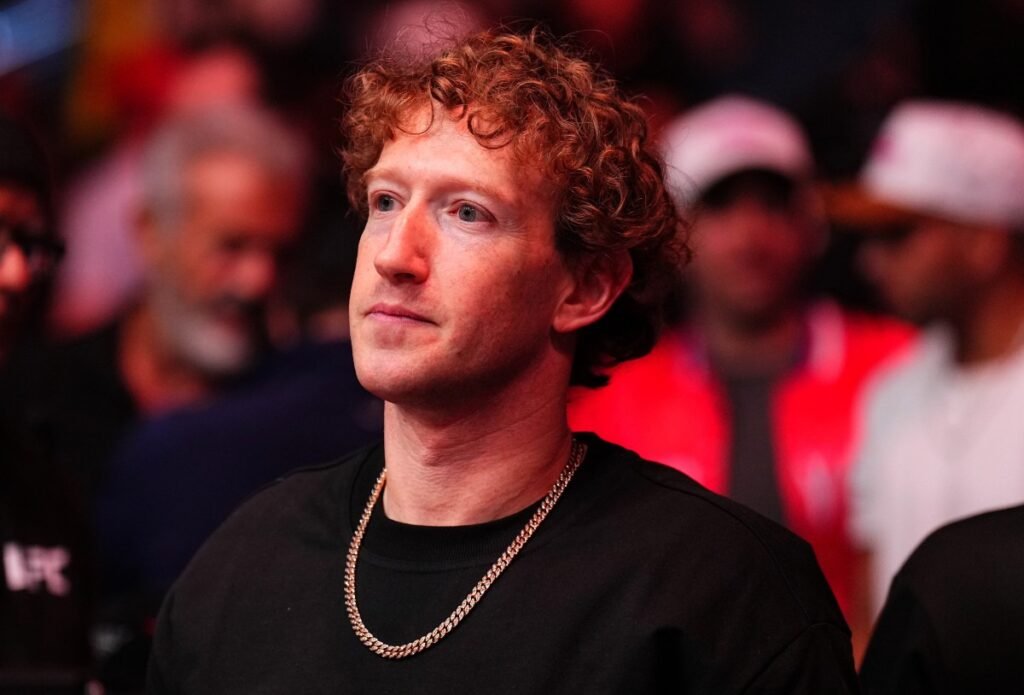
The crackdown on “woke” AI represents the latest Republican attack on the historically left-leaning Silicon Valley. Past investigations by Republicans have accused social media companies of manipulating algorithms to censor conservative voices. Meta’s Mark Zuckerberg recently made changes to Facebook and Instagram’s content moderation to be more inclusive of different perspectives.
The question arises regarding who determines whether AI models are neutral or biased and how this determination is made. Trump has expressed support for free speech, making an executive order regulating what AI models can or cannot say seem contradictory. However, a Florida judge recently ruled that AI chatbots are not protected by the First Amendment.
In response to this crackdown, OpenAI and other AI labs are working to ensure their AI chatbots reflect a wider range of viewpoints. These companies face the challenge of creating AI responses that satisfy everyone without promoting extremist views or misinformation.
Elon Musk, who was once a major financial supporter of Trump but has since distanced himself, founded xAI to develop an “anti-woke” AI chatbot named Grok to compete with ChatGPT. However, xAI has faced challenges as its chatbot made antisemitic remarks and shared Musk’s controversial opinions on various topics.
### What Silicon Valley and Big Tech want
In April, the White House received over 10,000 public comments from companies, local governments, and nonprofits regarding Trump’s AI Action Plan. OpenAI, Google, Meta, and Amazon took the opportunity to submit requests for AI policies that would benefit them.
Many leading AI developers urged Trump to ensure that training large language models on copyrighted material is considered fair use. This protection would be advantageous for companies involved in legal battles with copyright owners accusing them of using copyrighted works to train AI models.
Meta requested protection for open AI models, which are freely accessible online, to compete with closed offerings from OpenAI and Google. However, concerns were raised about the potential for open AI models to fall into the wrong hands, including bad actors in China.
Other groups, like The Future of Life Institute, called for increased investment in AI research outside of commercial entities. This request comes at a time when funding for American universities, known for scientific advancements, has been reduced.
While Trump’s AI Action Plan may not prioritize safety and security reporting standards like the Biden administration did, polls indicate that most Americans support holding AI companies accountable to such standards. Some state lawmakers are introducing bills to mandate safety and security reporting, which could face opposition from the Trump administration and Republican lawmakers if they clash with Trump’s AI Action Plan.