For enthusiasts of fusion power, achieving “breakeven” is a significant milestone: the moment when a fusion reaction generates more power than what was required to initiate it. Only one scientific experiment, conducted at the National Ignition Facility, has successfully achieved this feat after years of fine-tuning the system.
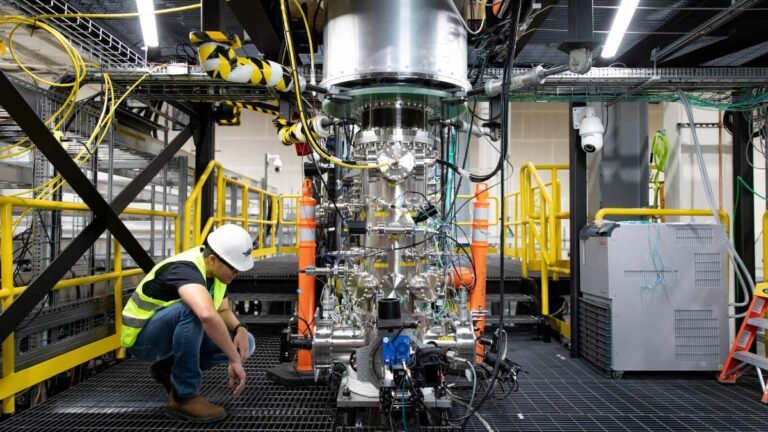
Zap Energy, a startup, raised $130 million in Series D funding for a new device called Century. This device utilizes a unique approach known as sheared-flow-stabilized Z-pinch for fusion power. Instead of employing magnets or lasers to compress the plasma, it passes an electric current through a plasma stream to generate a magnetic field that compresses the plasma and leads to fusion.
In order to progress towards a commercial power plant, Zap Energy needs to meet three key milestones with Century. First, it must demonstrate the ability to generate high-voltage pulses frequently and continuously, which it has shown success in by firing 1,080 consecutive pulses. The next step is to showcase the technology to the Department of Energy by running the device for over two hours, firing at 10-second intervals to produce at least 1,000 plasma pulses. Ultimately, to function as a commercial power plant, Zap’s reactor must generate 10 pulses per second for extended periods.
Following a successful demonstration for the Department of Energy, Zap Energy will add more liquid bismuth to the reaction chamber in Century. The molten metal safeguards other components of the device while absorbing heat that can be utilized to generate electricity in a commercial setting. Additionally, the company must ensure that the electrodes withstand the heat and particles released during fusion reactions, as they will require maintenance at some point for any commercial power plant.
By increasing the amount of electricity delivered to the reaction chamber until it reaches 100 kilowatts, Zap Energy aims to gradually improve Century in multiple iterations. If Century proves to be effective as planned, the company aims to have a demonstration by the end of the decade, leading to commercial power plants in the early 2030s.
Conway acknowledges the challenges associated with achieving commercial fusion power, emphasizing the significance of addressing various obstacles. Plasma physics and gain are identified as crucial aspects that must be successfully navigated, alongside other potential hurdles that may arise during the development process.
Competing with existing methods of generating electricity and heat poses a significant challenge for fusion power. Conway highlights the importance of cost-effectiveness in order to establish fusion power plants as viable alternatives. The economic viability of fusion power will play a crucial role in determining its widespread adoption and accessibility to the general public.