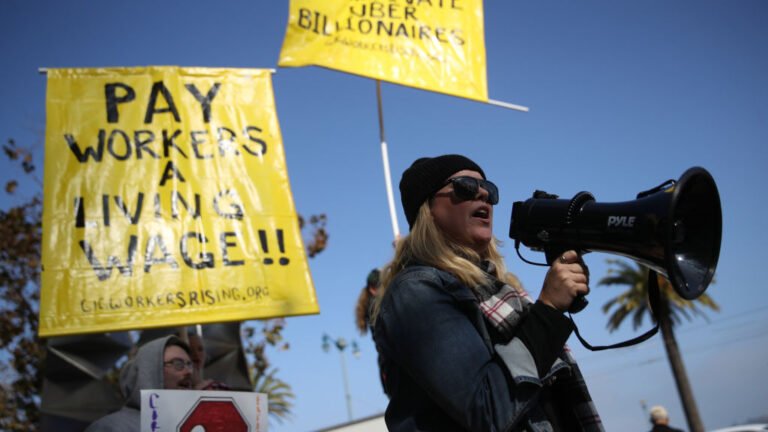
California lawmakers have reached an agreement with Uber and Lyft that will enable app-based drivers to organize unions, potentially leading to more affordable ride-hail fares. This development is significant for gig workers who have traditionally been classified as independent contractors, lacking certain protections granted to employees, such as the right to collective bargaining.
Governor Gavin Newsom, alongside Senate President Pro Tem Mike McGuire and Assembly Speaker Robert Rivas, announced support for two legislative pieces that pave the way for app-based drivers to unionize. Assembly Bill 1340, sponsored by SEIU California, and Senate Bill 371, sponsored by Uber and Lyft, are at the core of this historic agreement.
The deal allows drivers to organize for better pay, job security, and additional benefits. In return, California regulators have pledged to back legislation aimed at reducing costly insurance mandates for ride-hailing companies, expenses that have been linked to higher ride fares and lower driver earnings in the state.
The agreement marks a shift after Uber, Lyft, and other gig companies spent over $200 million to pass Prop 22 in California, classifying gig workers as independent contractors with limited benefits. Drivers have voiced concerns about the lack of control over their pay and job status, leading to limited influence on their earnings and working conditions. The new agreement is seen as a step towards empowering drivers to challenge unfair practices.
Margarita Peñalosa, a gig driver from Los Angeles and member of the California Gig Workers Union, highlighted the importance of giving drivers a voice to demand fair treatment without fear of repercussions. The ripple effects of this deal could extend to other states, as Massachusetts voters approved a similar initiative in 2024, allowing ride-hail drivers to unionize and negotiate their pay, benefits, and working conditions.