
A bunch of Canadian news outlets are in a tizzy, suing OpenAI for allegedly using their content without permission. The Read more

India-based audio platform Pocket FM has a vast content library. However, CEO Rohan Nayak believes there is room for expansion Read more
ChatGPT Search, OpenAI's AI-powered web search experience, has officially launched for all ChatGPT users, introducing several new features to enhance Read more
Humanz, a cutting-edge marketing platform for content creators and brands, has officially made its debut in the U.S. market, as Read more
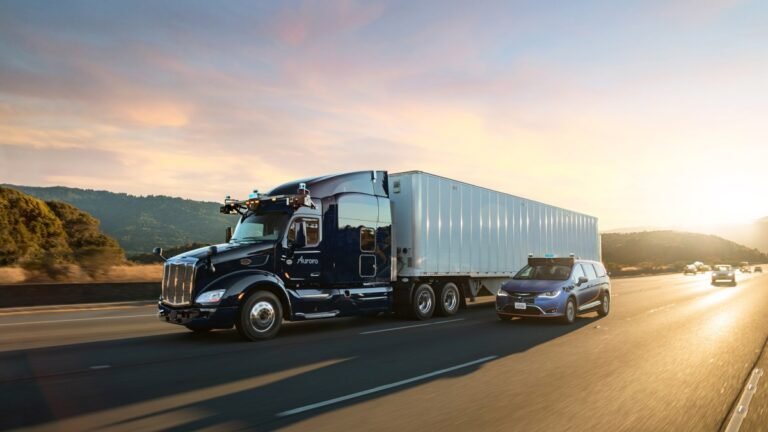
Autonomous vehicle technology startup Aurora Innovation is now aiming for April 2025 for the commercial deployment of its autonomous trucks, a delay of about a quarter from its original plan of launching by the end of 2024. The company decided to postpone the launch in order to continue validating its self-driving technology.
Aurora plans to enter the market as a carrier, but ultimately aims to pursue a driver-as-a-service model, where carriers purchase trucks equipped with Aurora Driver technology to offer their services to shippers.
The company is focused on measuring the performance and commercial readiness of its Aurora Driver, with the goal of reaching 90% automation by the commercial launch in the spring. Aurora intends to deploy up to 10 driverless trucks initially, with plans to scale to tens of trucks by the end of 2025.
Aurora has been conducting tests with pilot customers like FedEx, Werner, Schneider, and others, scheduling around 160 commercial loads per week. As of October 27, 2024, Aurora’s trucks have autonomously delivered more than 8,200 loads and covered over 2.2 million commercial miles, albeit with a human driver present.
Operating with a frugal mindset, Aurora recorded operating expenses of $196 million in the third quarter, including $35 million in stock-based compensation. The startup ended the quarter with $1.4 billion in cash and investments, providing the necessary runway into 2026 to fund its scaling and sustainability efforts.