
A bunch of Canadian news outlets are in a tizzy, suing OpenAI for allegedly using their content without permission. The Read more
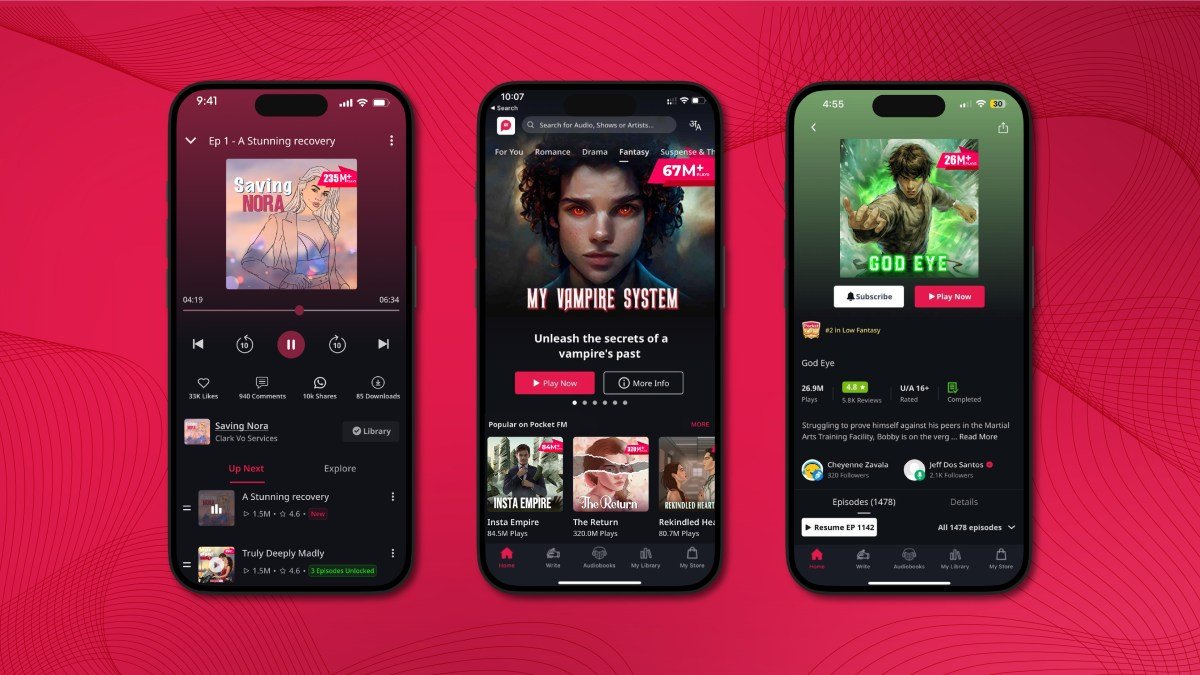
India-based audio platform Pocket FM has a vast content library. However, CEO Rohan Nayak believes there is room for expansion Read more
ChatGPT Search, OpenAI's AI-powered web search experience, has officially launched for all ChatGPT users, introducing several new features to enhance Read more

Humanz, a cutting-edge marketing platform for content creators and brands, has officially made its debut in the U.S. market, as Read more
DeepL has become known for its online text translation service, offering a level of nuance and precision that sets it apart from competitors like Google. This success has propelled the German startup to a valuation of $2 billion and over 100,000 paying customers.
Now, in response to the increasing demand for AI services, DeepL is expanding its platform to include audio capabilities. With DeepL Voice, users can listen to someone speaking in one language and instantly receive a translation in another language in real time.
Supported languages currently include English, German, Japanese, Korean, Swedish, Dutch, French, Turkish, Polish, Portuguese, Russian, Spanish, and Italian. Translated captions are available for all 33 languages supported by DeepL Translator.
DeepL Voice focuses on real-time, live conversations and video conferencing, providing translations in text format rather than audio or video files. This feature allows for translations to be displayed as mirrored text on smartphones during meetings or as subtitles in video calls.
While DeepL Voice is the company’s first voice-related product, founder and CEO Jarek Kutylowski hinted that more innovations may be on the horizon. Other companies, such as Google, are also incorporating real-time translation features into their services, indicating a growing trend in the industry.
The development of DeepL Voice has been a highly requested feature since the company’s launch in 2017. DeepL emphasizes building its products from the ground up, focusing on optimizing language models for translation efficiency and accuracy.
Real-time translation is a key selling point of DeepL Voice, catering to live communication scenarios where delays are impractical. The service’s text-based approach allows for fast processing, ensuring quick and accurate translations.
Potential applications for DeepL Voice extend beyond video conferencing to industries like hospitality, where frontline workers can use the service to facilitate communication with customers. Data privacy concerns are addressed by DeepL, with assurances that user voices are not stored or utilized for training language models.
As DeepL continues to innovate in the field of AI translation, DeepL Voice represents a significant step forward in bridging language barriers and enabling seamless communication across different languages.