
Bitcoin reached a new all-time high of $118,900 on Friday, surpassing its previous record of $113,822 set on Thursday. As Read more
Selling software to companies can be a daunting task, especially when it comes to meeting security requirements. Chas Ballew, founder Read more

Earlier this week, San Diego startup Gallant announced $18 million in funding to bring the first FDA-approved ready-to-use stem cell Read more

The world’s richest man buys out one of the most popular social media platforms and uses it as a propaganda Read more
Frontier, the organization backed by Stripe, Google, and Meta, announced Tuesday it is paying startup Arbor Energy to remove 116,000 tons of carbon dioxide by the end of the decade.
The deal gives Arbor $41 million to help it build its first commercial-scale power plant in southern Louisiana that will burn waste biomass to generate electricity for a data center. At the same time, it’ll sequester the resulting CO2, shipping it via pipeline to be buried deep underground.
“We are able to market it as two products,” Arbor co-founder and CEO Brad Hartwig told TechCrunch. “We’re selling carbon-free base load energy as well as net [carbon] removals.”
The twofer is inherent to the technology, which is called BiCRS, or biomass carbon removal and storage.
“One of the great things about BiCRS is that you get the capture part for free because plants are drawing down the CO2, and all you have to do is strip it out in and store it,” Hannah Bebbington, head of deployment at Frontier, told TechCrunch.
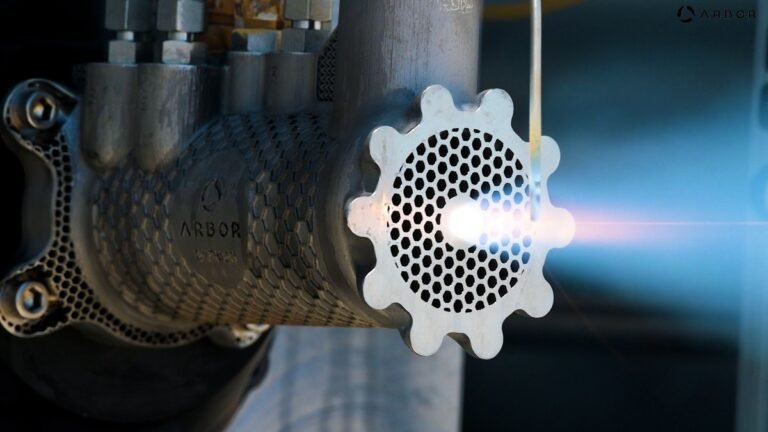
Burning biomass is older than human civilization, but Arbor adds a space age twist to the practice. Hartwig, who previously worked at SpaceX, drew inspiration from rocket turbomachinery in developing Arbor’s power plant. The company’s first facility will generate between 5 and 10 megawatts of electricity. Hartwig said the company is working to steadily improve the output.
In the power plant, waste biomass is first transformed into syngas. The startup had previously intended to use an off-the-shelf gasifier, but none of them were up to snuff, so it developed its own. In the gasifier, supercritical CO2 — which is carbon dioxide under immense pressure — sourced from the power plant itself, helps dissolve the biomass, releasing hydrogen and carbon monoxide gas.
The syngas and CO2 then head to a combustion chamber, where the syngas is burned using pure oxygen. That produces water vapor, heat, and more carbon dioxide. (The presence of CO2 in the combustion chamber is by design, Hartwig said, helping to moderate temperatures so the machine’s metal doesn’t melt.)
The hot gases are then fed through a turbomachinery to generate electricity. Most of the CO2 is diverted to a pipeline that’ll transport it for permanent storage, while a portion of it is routed back to the gasifier.
Hartwig has previously, aptly described the power plant as a “vegetarian rocket engine.”
The entire system captures 99% of the CO2 released by the combustion, far higher than competing methods. And because it’s burning biomass, the process removes carbon from the atmosphere.
Bebbington said Frontier estimates there is between 1 to 5 gigatons of waste biomass available every year. But not all biomass is created equal. Some needs to be transported longer distances. Others might decompose on a farm field to fertilize it.
When vetting any carbon removals, “we want to be careful that we’re taking that into consideration.” she said. “We require that every ton delivered also meets sustainable biomass principles in a very clear way.”
Even if only 1 gigaton meets those standards, there’s still a lot of potential for BiCRS and its close cousin, bioenergy with carbon capture and storage (BECCS), to make a significant dent in future energy needs.
For Frontier, Arbor will only burn biomass, ensuring the power plant will remove carbon as required by the deal. Frontier had previously supported Arbor with a pre-purchase agreement.
Arbor’s power plant could theoretically burn any source of hydrocarbons, including natural gas. “The system is specifically designed to be fuel flexible,” Hartwig said.
“We would like BECCS to be a major player for data centers, industrial electrification, grid resilience,” Hartwig said. “But if any new fossil assets are built, we’d like those to all be zero emission as well. Let’s capture all of those emissions.”