
Bitcoin reached a new all-time high of $118,900 on Friday, surpassing its previous record of $113,822 set on Thursday. As Read more

Selling software to companies can be a daunting task, especially when it comes to meeting security requirements. Chas Ballew, founder Read more

Earlier this week, San Diego startup Gallant announced $18 million in funding to bring the first FDA-approved ready-to-use stem cell Read more
The world’s richest man buys out one of the most popular social media platforms and uses it as a propaganda Read more
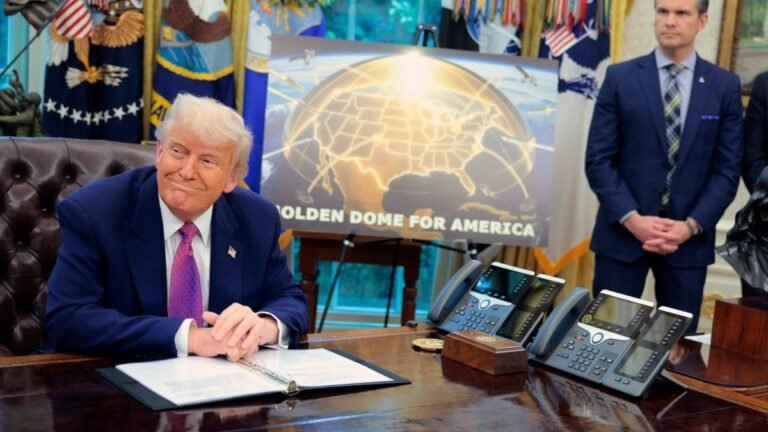
Golden Dome, the Trump administration’s gambit to build a next-generation missile defense system, has startups and longstanding defense contractors preparing to duke it out for a piece of a $151 billion multi-year contract.
The Battle for Golden Dome
The process to qualify for the $151 billion contract vehicle, essentially an umbrella program, is stacked against most startups — not because of their tech. Instead, smaller companies may be thwarted by a multi-layered, expensive bureaucratic process used to ensure a company can meet security and other compliance requirements.
Ultimately, Golden Dome may not be the zero-sum battle of emerging tech versus incumbents. The startups that do breakthrough will be those that are able to convince the biggest defense contractors to take them on as subcontractors.
SHIELD Contract: A Tech Buying Spree
The Pentagon’s Missile Defense Agency released a draft solicitation for a $151 billion, multi-award contract, the prelude to the government’s forthcoming defense tech buying spree. The 10-year contract, called SHIELD, acts as an umbrella that will be used to buy technology for the Golden Dome system.
Tech and VC Heavyweights Join the Disrupt 2025 Agenda
Bryce Dabbs, CEO of consulting firm Approach Venture, estimates between 5% and 10% of the pot could realistically go to non-traditional vendors. Venture-backed companies like Anduril and SpaceX will be able to meet security and compliance requirements, but everyone else will likely need to sub under a prime in order to compete.
FAR, Not Fair
William Greenwalt, senior fellow at American Enterprise Institute, was less optimistic about non-traditionals gaining anything at all from this due to the structure of the contract being run under the Federal Acquisition Regulation and the Competition in Contracting Act. Greenwalt believes the program should be done as an Other Transaction Authority to give the DOD more flexibility to work with non-traditional vendors and fund prototypes with follow-on production opportunities.
Trump’s Bold Move
President Trump has appointed General Michael Guetlein, the second in command of the U.S. Space Force, to lead a groundbreaking initiative. The goal is to finalize the program’s architecture within just three years, focusing on technologies that are ready for immediate deployment.
A New Approach
Dubbed “Golden Dome,” this initiative aims to swiftly enhance homeland security against potential threats from adversaries. General Guetlein described it as a bold and aggressive approach to safeguarding the nation.