
Bitcoin reached a new all-time high of $118,900 on Friday, surpassing its previous record of $113,822 set on Thursday. As Read more

Selling software to companies can be a daunting task, especially when it comes to meeting security requirements. Chas Ballew, founder Read more

Earlier this week, San Diego startup Gallant announced $18 million in funding to bring the first FDA-approved ready-to-use stem cell Read more

The world’s richest man buys out one of the most popular social media platforms and uses it as a propaganda Read more
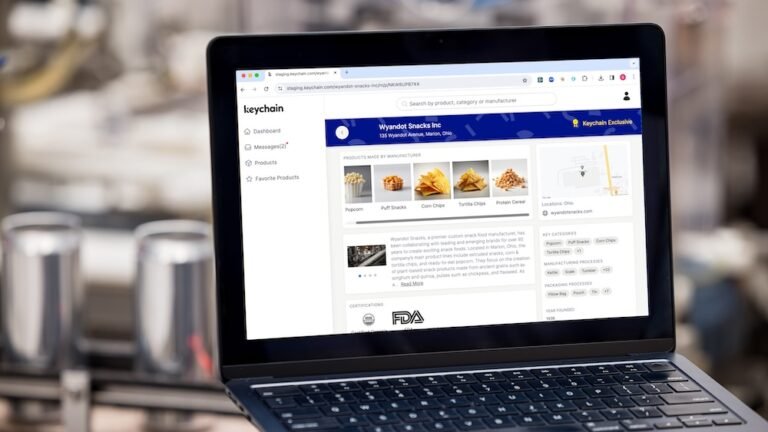
Most consumer brands have become “completely disassociated” from the manufacturers who actually create their products, says Keychain CEO Oisin Hanrahan. “They don’t own anything except a brand and a set of marketing functions,” Hanrahan said. That’s what Hanrahan is trying to change with Keychain. Brands can use the website to look up different products and see who actually manufactures them, then reach out to those manufacturers and potentially partner on future products.
In November 2023, the New York-headquartered startup announced raising an $18 million seed round led by Lightspeed Venture Partners, then actually launched in February. Since then, Keychain says big brands and retailers have already used the platform to fulfill $500 million worth of manufacturing demand. Behind the scenes, Hanrahan said the company was able to use the unusually large round to build up its database of products; with some help from AI, the startup has combined data it’s purchased and gathered firsthand to index more than 763,224 products from 24,027 manufacturers.
Keychain recently opened an office in Austin, signed Carvel cake-maker Rich Products as a customer, and hired Mitchell Madoff, who previously led private label offerings at Whole Foods, as its head of retail partnerships. In a statement, Kevin Spratt, Rich Products’ regional president for U.S./Canada, described the partnership as “a strategic move that will empower us to drive greater growth, foster enhanced innovation and deliver even more unique value for our customers.”
Similarly, Paul Voge, co-founder and CEO of beverage company Aura Bora, said in a statement that Keychain has “significantly streamlined our supply chain” and “saved us countless hours and resources by eliminating the need to contact manufacturers individually.” Hanrahan pointed to a variety of larger market forces that he said are driving demand for Keychain, from U.S. trade policy that favors domestic manufacturing to growing consumer interest in products tailored to various nutritional and allergy needs. Ultimately, his goal is for Keychain to connect “anybody who wants to make anything” with “every single part of the supply chain,” from manufacturers to packaging. “We want to build the software layer that connects all those pieces,” he said.