
Bitcoin reached a new all-time high of $118,900 on Friday, surpassing its previous record of $113,822 set on Thursday. As Read more

Selling software to companies can be a daunting task, especially when it comes to meeting security requirements. Chas Ballew, founder Read more

Earlier this week, San Diego startup Gallant announced $18 million in funding to bring the first FDA-approved ready-to-use stem cell Read more

The world’s richest man buys out one of the most popular social media platforms and uses it as a propaganda Read more
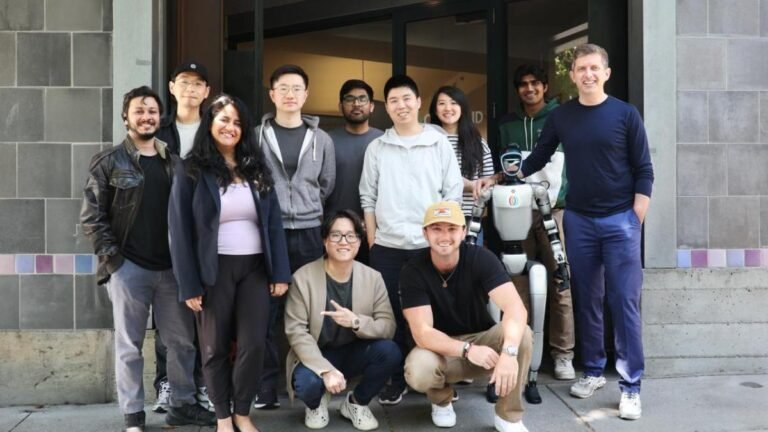
Many companies are focused on building robots, or the hardware components to help them move, grip objects, or interact with the world around them. Silicon Valley-based OpenMind is focused under the hood.
OpenMind is building a software layer, OM1, for humanoid robots that acts as an operating system. The company compares itself to being the Android for robotics because its software is open and hardware agnostic.
Stanford professor Jan Liphardt, the founder of OpenMind, told TechCrunch that humanoids and other robots have been around and able to do repetitive tasks for decades. But now that humanoids are being developed for use cases that require more human-to-machine interactions, like having a humanoid in your home, they need a new operating system that thinks more like a human.
“All of a sudden, this world is opening where machines are able to interact with humans in ways I’ve certainly never before seen,” Liphardt said. “We’re very much believers here that it’s not just about the humans, but we really think of ourselves as a company that is a collaboration between machines and humans.”
OpenMind unveiled on Monday a new protocol called FABRIC that allows robots to verify identity and share context and information with other robots.
Unlike humans, machines can learn almost instantly, Liphardt said, which means giving them a better way to connect to other robots will allow them to more easily train and absorb new information.
Liphardt gave the example of languages and how robots could connect to each other and share data on how to speak different languages, which would help them better interact with more people without having to be taught each language by a human directly.
Tech and VC heavyweights join the Disrupt 2025 agenda
“Humans take it for granted that they can interact with any other human on Earth,” Liphardt said. “Humans have built a lot of infrastructure around us that allows us to trust other people, call them, text them, and interact and coordinate and do things together. Machines, of course, are going to be no different.”
OpenMind was founded in 2024 and is gearing up to ship its first fleet of 10 OM1-powered robotic dogs by September. Liphardt said that he’s a big believer in getting the tech out there and iterating on it after the fact.
“We full well expect all the humans that will be hosting these quadrupeds, they’ll come back with a long list of things they didn’t like or they want, and then it’s up to us to very, very quickly iterate and improve the machines,” he said.
The company also recently raised a $20 million funding round led by Pantera Capital, with participation from Ribbit, Coinbase Ventures, and Pebblebed, among other strategic investors and angel investors.
Now, the company is focused on getting its tech into people’s homes and starting to iterate on the product.
“The most important thing for us is to get robots out there and to get feedback,” Liphardt said. “Our goal as a company is to do as many of these tests as we can, so that we can very rapidly identify the most interesting opportunities where the capabilities of the robots today are optimally matched against what humans are looking for.”