Bitcoin reached a new all-time high of $118,900 on Friday, surpassing its previous record of $113,822 set on Thursday. As Read more

Selling software to companies can be a daunting task, especially when it comes to meeting security requirements. Chas Ballew, founder Read more

Earlier this week, San Diego startup Gallant announced $18 million in funding to bring the first FDA-approved ready-to-use stem cell Read more
The world’s richest man buys out one of the most popular social media platforms and uses it as a propaganda Read more
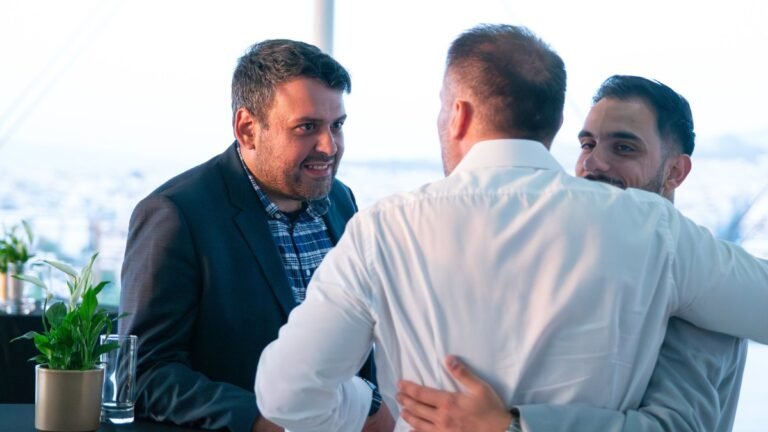
In the summer of 2021, Dimitrios Kottas made a move that would be unfathomable to most Silicon Valley engineers: after leaving his coveted position as an engineering manager at Apple’s Special Projects Group, he packed up his life in California and moved back to Athens to start a defense company.
Three and a half years later, his startup, Delian Alliance Industries, has set up solar-powered surveillance towers that monitor some of Greece’s borders around the clock and detect wildfires on remote islands, along with a pipeline of other products, including concealed sea drones designed to keep enemies at bay.
Breaking into Europe’s Defense Market
Kottas’ most ambitious bet isn’t on any particular technology — it’s really that a small Greek startup can break through Europe’s notoriously splintered defense market. This may seem like less of a gamble today, especially as defense tech has never been hotter, but Kottas’ path to Delian has been a long work in progress.
After earning recognition for his academic work at the University of Minnesota on GPS-denied navigation, he joined Apple in 2016, where he spent six years working on autonomous systems featuring cameras, lidars, and radars. The technologies he co-developed at Apple’s secretive division clearly helped inform what Delian is building.
Geopolitical Events and Technological Innovation
It wasn’t just technological insight that drove his career change. A series of geopolitical events had begun gnawing at him, leading him to start with pragmatic products like surveillance towers and later expanding into concealed autonomous aerial and sea drones and vessels designed to lie dormant until threats appear.
Delian’s Success and Challenges in the European Market
Despite Delian’s technological achievements and operational success in Greece, the broader European market remains a formidable challenge. U.S. officials have reportedly been pressuring European countries to continue buying weapons from U.S. outfits, making it difficult for startups like Delian to scale across borders.
Kottas acknowledged the concern, particularly in France, but argued that the landscape is changing. Initiatives like Safe and ReArm Europe are designed to encourage cross-border defense cooperation, with examples like Portugal’s Tekever achieving unicorn status and Germany’s Quantum Systems competing globally.
Investors have shown confidence in Delian, providing the startup with $14 million in funding. The company’s total funding to date now stands at $22 million, with support from backers like Air Street Capital and Marathon Venture Capital.
Asked about Anduril specifically, Kottas is respectful but not intimidated. He sees it as a generational company that will inspire many founders and military officers worldwide. However, he warns against prematurely predicting winners, comparing the current situation to the early days of self-driving cars.
Can a Greek startup like Anduril convince major European defense establishments to trust foreign technology with their national security? Kottas recently bid for a German tender to test his belief that superior technology and competitive pricing can overcome the decentralized nature of Europe.
What sets Kottas apart from other defense tech entrepreneurs is his personal connection to the mission. Unlike companies like Lockheed Martin, Anduril aims to create technology that could potentially save lives of loved ones, reflecting a mindset shared by entrepreneurs across Europe who view conflict as a lived reality.
Kottas’ journey from Athens to Minneapolis to Apple and back to Athens demonstrates his comfort with taking on long odds. Building a company in a smaller market like Europe presents challenges but also opportunities for resilience, efficiency, and a focus on creating top-notch technology at an affordable price point.
Overall, Kottas believes that overcoming fragmentation in the European market is possible in the coming years, and it can be turned into an advantage for those who navigate it wisely.