Basecamp Research, a London startup, has raised $60 million to develop an AI agent focused on biology and biodiversity. The company aims to provide new insights that humans couldn’t achieve on their own.
The Founders and Approach
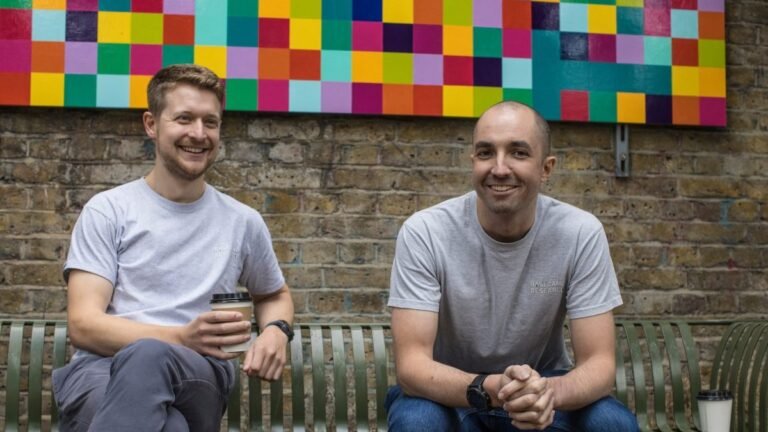
– Co-founders Glen Gowers and Oliver Vince, both biology PhDs, are building models from the ground up. They gather primary data firsthand to create AI models that outperform existing ones in predicting protein structures and molecule interactions.
Ambitious Goals
– Basecamp Research’s ultimate goal is to create an AI with better insights into biology than any human. By combining exploration with AI training, the startup aims to build a ‘ChatGPT’ for nature, powered by the largest compute cluster dedicated to the natural world.
Future Plans
– With a recent Series B funding led by Singular, Basecamp Research plans to collaborate with the Broad Institute for continued growth. The company aims to assist in drug discovery and other challenges related to understanding and utilizing the natural world.
In conclusion, Basecamp Research is pioneering AI technology in the field of biology, aiming to surpass human capabilities in understanding DNA and biology through innovative approaches and partnerships.
It seems unlikely that Basecamp Research will create a “ChatGPT”-style interface for the startup anytime soon. According to Gowers, the company is focusing more on B2B opportunities rather than developing a product for the general public. However, he didn’t rule out the possibility of such a product in the future.
Similar to other companies working on large “science” models, Jua initially targeted organizations in need of better weather pattern insights with its physics model.
Basecamp Research has not disclosed its valuation for this Series B round, but it’s an up-round. The startup has raised $85 million so far, with previous investors like Hummingbird, True Ventures, and Valo. PitchBook valued the company at $71 million in 2022. The Series B also attracted investors like S32, redalpine, André Hoffmann, Feike Sijbesma, and Paul Polman.