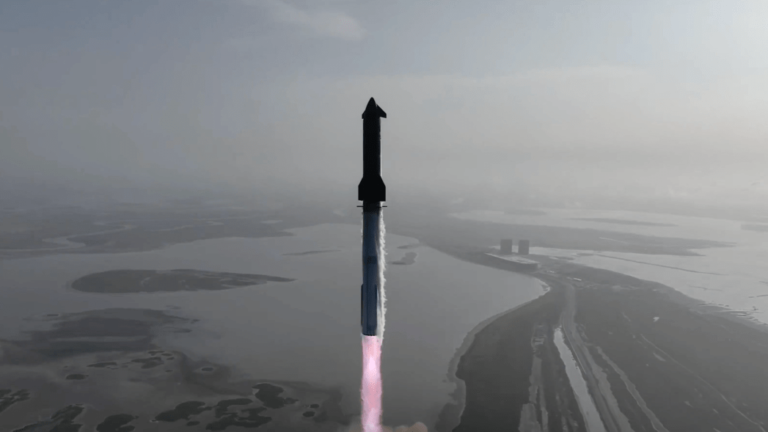
SpaceX’s Starship successfully separated from its Super Heavy rocket booster and reached orbit on Tuesday evening. However, the spacecraft later began spinning and made an uncontrolled reentry into the Indian Ocean. Despite this setback, SpaceX had cleared the surrounding airspace where Starship was expected to land.
The ninth test flight of the Starship provided a mix of successes and failures for the company. This test marked the smoothest Starship launch of the year, following two previous explosions. Launched from SpaceX’s facility in southern Texas, Starship was atop the flight-proven Super Heavy booster, which had returned during the seventh flight test.
Although the heavy booster successfully separated and Starship entered space, the spacecraft encountered issues during the flight. It was unable to open a side cargo hatch as planned to deploy mock satellites, and later lost attitude control for reentry. These challenges were faced less than a week after the Federal Aviation Administration cleared SpaceX to proceed with the test flight, following the previous explosions earlier in the year.
In response to the incidents, SpaceX implemented hardware changes to improve reliability and updated safety analysis for future flights. The FAA expanded hazard areas in the U.S. and other countries based on these developments. The company continues to push forward with its Starship program, aiming for successful launches and landings in the future.