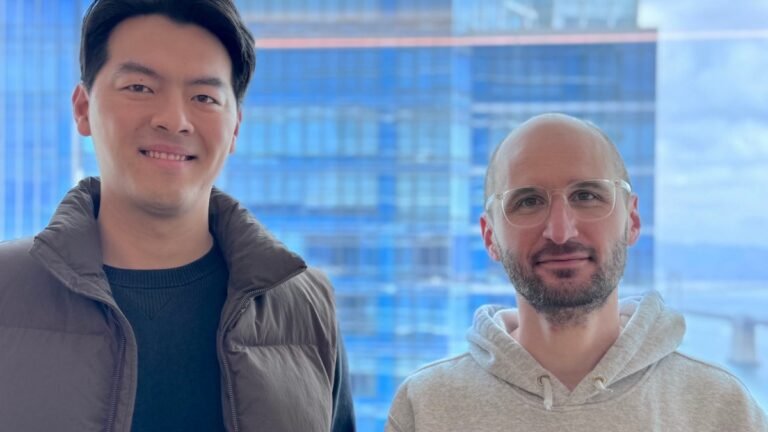
Dennis Xu is a tech entrepreneur with a background in founding startup companies, although he openly admits that he is not a programmer. One of his previous ventures was co-founding the AI note-taking app Mem, which received early investments from OpenAI. Xu’s latest startup is called Adaptive Computer, which aims to revolutionize personal computer software by allowing non-programmers to create fully-featured apps through a no-code web-app platform.
Funding and Partnerships
Recently, Xu and co-founder Mike Soylu secured a $7 million seed round, with Pebblebed leading the investment and participation from Conviction, Weekend Fund, Jake Paul’s Anti Fund, Roblox CEO Dave Baszucki, and others. Pebblebed, a new seed fund, was founded by Pamela Vagata, a former AI engineer at Stripe, and Keith Adams, former chief architect at Slack.
Tech Advancements
Adaptive Computer’s platform is capable of creating web apps that include functionalities such as database instances, user authentication, file management, payments via Stripe, scheduled tasks, and AI features like image generation, speech synthesis, content analysis, and web search/research. During a demo of their product ac1, which is still in alpha mode, the platform generated a JavaScript-based app for logging bicycle rides within minutes after receiving a text prompt.
Competition and Differentiation
While Adaptive Computer is not the only platform offering “vibe coding” based on text prompts, it sets itself apart by focusing on simplicity and usability for non-programmers. Xu highlights that other platforms catered initially to programmers, making it challenging for non-programmers to utilize them effectively. Adaptive Computer aims to empower everyday individuals to create apps to enhance their daily lives without the need for extensive programming knowledge.