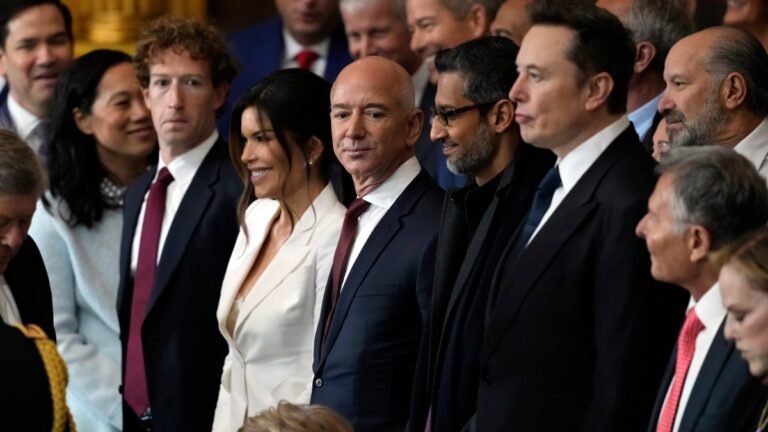
On Thursday, House Judiciary Chair Jim Jordan (R-OH) sent letters to 16 American technology firms, including Google and OpenAI, asking for past communications with the Biden administration that might suggest the former president coerced or colluded with companies to censor lawful speech in AI products. The Trump administration’s top technology advisors had previously hinted at a looming battle with Big Tech over AI censorship, marking the next phase in the ongoing culture war between conservatives and Silicon Valley.
Jordan, who had previously led an investigation into potential collusion between the Biden administration and Big Tech to stifle conservative voices on social media, is now shifting his focus to AI companies and their intermediaries. In letters to tech executives like Google’s Sundar Pichai, OpenAI’s Sam Altman, and Apple’s Tim Cook, Jordan referenced a committee report from December that he claims exposed the Biden-Harris Administration’s efforts to control AI in order to suppress speech.
The inquiry gave companies such as Adobe, Alphabet, Amazon, Apple, and others until March 27 to provide information. While some of the companies declined to comment immediately, there was a notable absence in Jordan’s list – Elon Musk’s xAI lab. Musk, a prominent tech figure and close ally of Trump, has been vocal about AI censorship issues in the past.
There were signs that conservative lawmakers would intensify their scrutiny of AI censorship, prompting some tech companies to adjust their AI chatbots to handle politically sensitive queries differently. OpenAI, for example, announced changes to its AI models to ensure more perspectives were represented and to prevent censorship of certain viewpoints.
Meanwhile, Anthropic revealed that its latest AI model, Claude 3.7 Sonnet, would provide fewer answers and more nuanced responses on controversial topics. However, other companies were slower to adapt their AI models when it came to political subjects. Google’s Gemini chatbot, for instance, reportedly avoided responding to political queries leading up to the 2024 U.S. election.
Some tech executives, like Meta’s Mark Zuckerberg, fueled accusations of Silicon Valley censorship by alleging that the Biden administration pressured social media platforms to suppress specific content, such as misinformation about COVID-19.