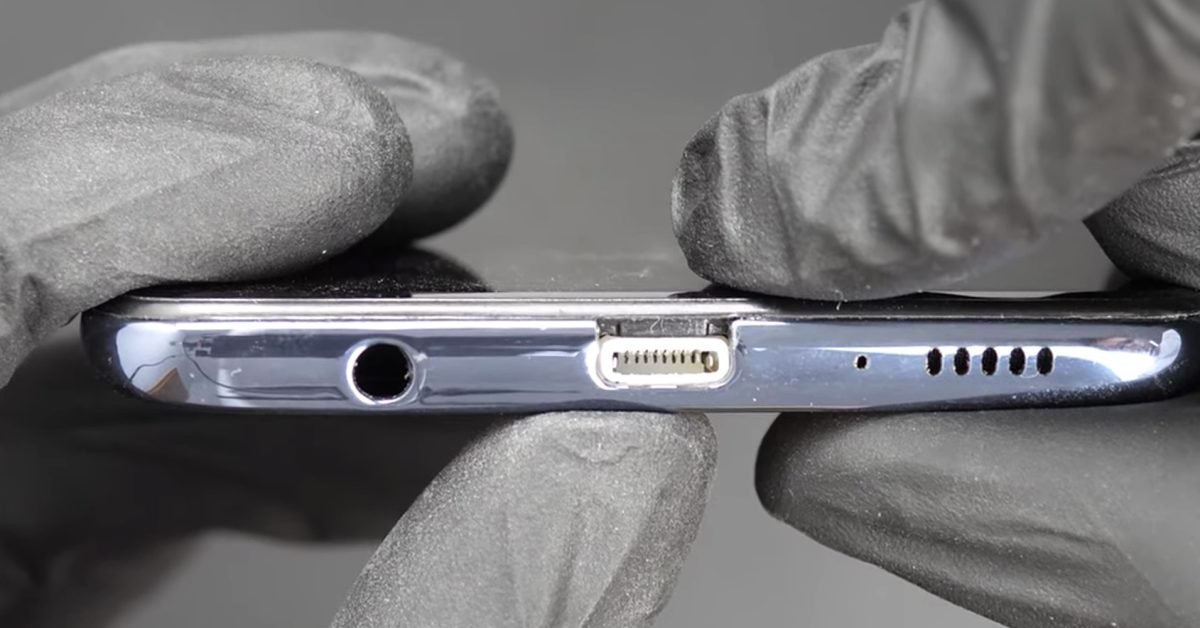
Engineer Ken Pillonel has successfully integrated a functional Apple Lightning port into a Samsung Galaxy A51, completing the project this April to “balance the chaos” of his previous USB-C iPhone modification. The device supports both charging and data transfer, marking the first known instance of Apple’s proprietary connector operating on the Android operating system.
Engineering the First Lightning-Equipped Android
While the project was intentionally revealed on April Fool’s Day, the technical execution is a legitimate engineering achievement rather than a prank. Pillonel utilized a Samsung Galaxy A51 for the modification, reversing the logic of his 2021 project where he became the first to install a functional USB-C port on an iPhone.
The modification required overcoming complex hardware handshakes. The engineer told Engadget that Apple’s Lightning cables are programmed to recognize only specific hardware. “The Lightning cables sold by Apple are not ‘dumb’. They will only charge Apple devices. So I had to find a way to trick the cable into thinking it was plugged into an Apple device,” Pillonel explained.
Technical Challenges and Internal Integration
Beyond the software requirements, the physical integration presented significant spatial hurdles. The engineer had to ensure the entire bypass mechanism and the Lightning port housing could fit within the smartphone’s existing chassis. This required precision engineering to avoid interfering with other internal components of the Samsung device.
The Context of the Lightning Connector
Industry analysts largely view this project as a functional “downgrade,” as Android devices typically utilize the more versatile USB-C standard. The Lightning connector has been Apple’s primary interface for nearly a decade, following its introduction at a September 2012 event where Phil Schiller labeled it the “modern connector for the next decade.”
While the Lightning port has reached that ten-year milestone, rumors suggest Apple may eventually retire the technology. Speculation regarding the iPhone 14 suggests the company could finally transition to USB-C or move toward a completely wireless, portless design. However, Pillonel’s project demonstrates that the proprietary technology can be forced to work outside of Apple’s walled garden.
Future of the Modification
Pillonel has confirmed he does not intend to sell this modified Samsung Galaxy A51, unlike his previous USB-C iPhone which garnered significant attention on auction sites. He told Engadget, “I didn’t want to force trying to sell it because that’s not really who I am. I want to focus on my engineering and science projects.”
A comprehensive technical breakdown of the build is expected to be released on his YouTube channel shortly. The project serves as a technical demonstration of hardware interoperability and the persistent barriers between competing mobile ecosystems.