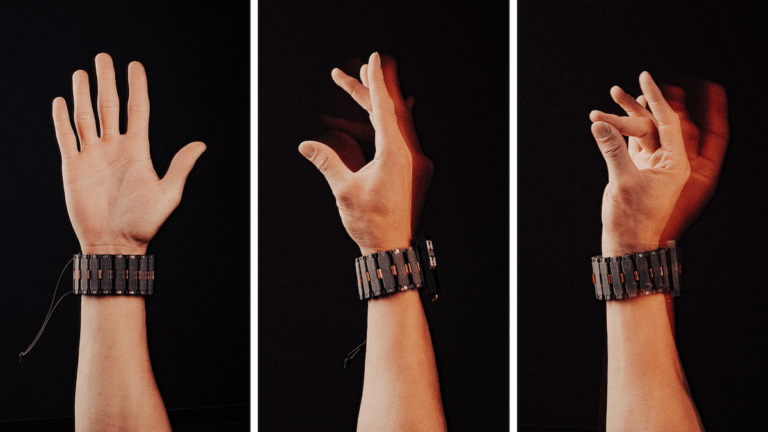
Meta Researchers Develop Wristband for Computer Control
Meta researchers are developing a wristband that lets people control a computer using hand gestures. This includes moving a cursor, opening apps, and sending messages by writing in the air as if using a pencil. Meta’s wristband employs a technique called surface electromyography (sEMG), which detects electrical signals generated by muscle activity to interpret user movements, as explained in a research paper published in the journal Nature. These signals can sense a person’s intended actions, even before they do them.
Less Invasive Tools for Interacting with Computers
The goal of this wristband is to provide less invasive tools to interact with computers for people with motor disabilities. The company is collaborating with Carnegie Mellon to test the wristband with people who have spinal cord injuries, enabling them to use computers even if they are unable to fully use their arms or hands. Douglas Weber, a professor in the Department of Mechanical Engineering and the Neuroscience Institute, noted that even people with complete hand paralysis still exhibit some muscle activity. As a result, the device is able to interpret their intended actions.
Comparison with Other Projects
The wristband is a simpler alternative to other projects, such as Elon Musk’s Neuralink, which aims to implant brain chips in individuals with severe paralysis. Other non-invasive approaches include headsets that utilize electroencephalogram (EEG) signals; however, these have limitations due to the weak signals they produce. Meanwhile, Meta’s wristband could be used immediately without surgical intervention, and its use of sEMG signals means it operates at a higher frequency than EEG.